

(photo credit: Microsoft Stock Images)
Self-employment can give parents more control over their schedules, but family finances become less predictable when income changes from month to month. Client payments may arrive late, business expenses can fluctuate, and traditional employee benefits become your responsibility. A practical financial system should account for these differences.
Set a Minimum Household Budget
Start by reviewing income from the past six to 12 months. Instead of budgeting around your average or highest earnings, identify what you typically bring home during slower periods.
Use that amount to cover essential household expenses such as housing, groceries, utilities, transportation, childcare, insurance, and minimum debt payments. When earnings exceed your baseline, decide where the additional money goes before spending it.
Separate Business Money From Family Money
Keep business revenue and expenses in accounts separate from household funds. Mixing everything together can make it difficult to determine whether the business is profitable or how much money is actually available for personal spending.
Consider transferring a set amount from the business account to your household account on a regular schedule. This can create some consistency even when clients pay at irregular times.
Taxes require similar discipline. Setting aside tax money as income arrives can prevent quarterly or annual obligations from disrupting the family budget.
Prepare for Expenses You Know Are Coming
An emergency fund should cover genuine surprises, but many large expenses are predictable. School supplies, holidays, vehicle registration, annual insurance premiums, and summer childcare may happen every year.
Create separate savings categories for these costs. Saving $75 each month for a $900 annual expense is easier on the household budget than finding the full amount at once.
Protect the Income Supporting Your Family
Self-employed parents may need to arrange benefits that an employer would otherwise provide. Health coverage, disability insurance, retirement savings, and life insurance deserve individual attention.
Parents comparing life insurance quotes should look beyond the monthly premium. Consider how much money dependents would need for housing, childcare, debts, and other ongoing expenses if a parent’s income disappeared.
Keep Looking Beyond This Month
Retirement can easily become secondary when current family expenses demand attention. Options such as IRAs, SEP IRAs, and solo 401(k)s can help self-employed workers keep saving for the future.
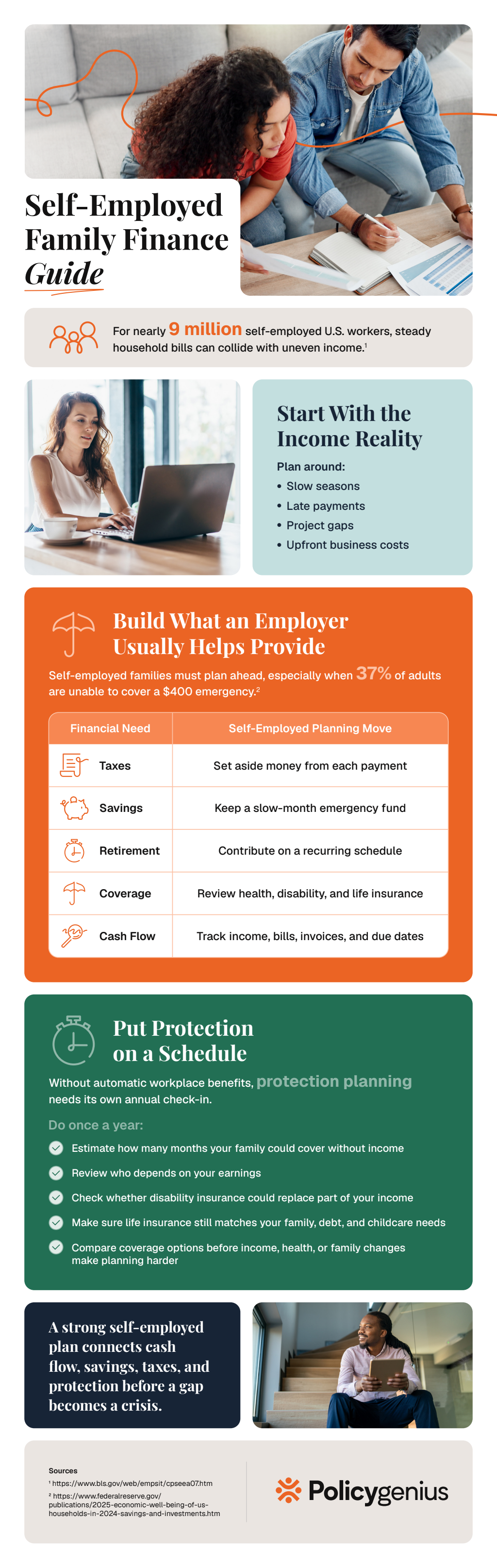
Variable income doesn’t have to mean constant financial uncertainty. A conservative budget, separate accounts, planned savings, insurance protection, and long-term goals give families a structure that can handle both strong and slow business months. Look over the infographic below to learn more.

Hi, I’m Jessica! I am wife to Chris, and mom to Kaip, Alana and Koa. I am a website developer and blogger. In this space, I share about everything from parenting, making money from home, recipes, mom lifestyle, and things for kids! Learn more about me here.
